It’s as if the valley were whispering to us: ‘You’re in the right place.’
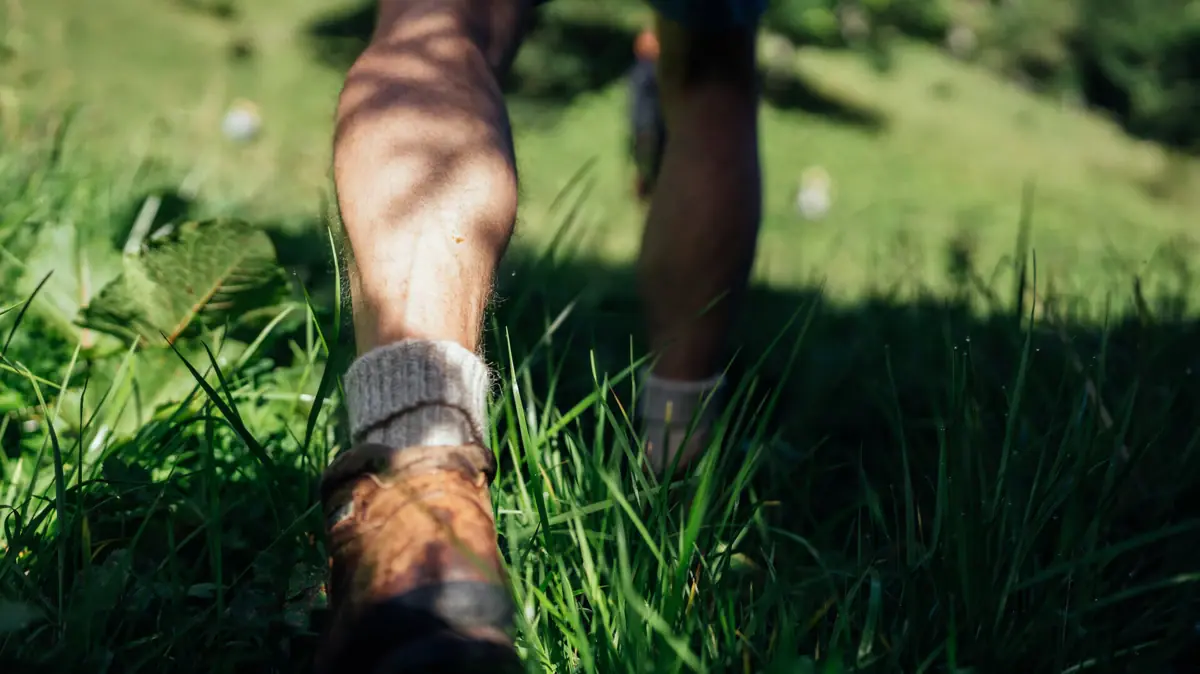
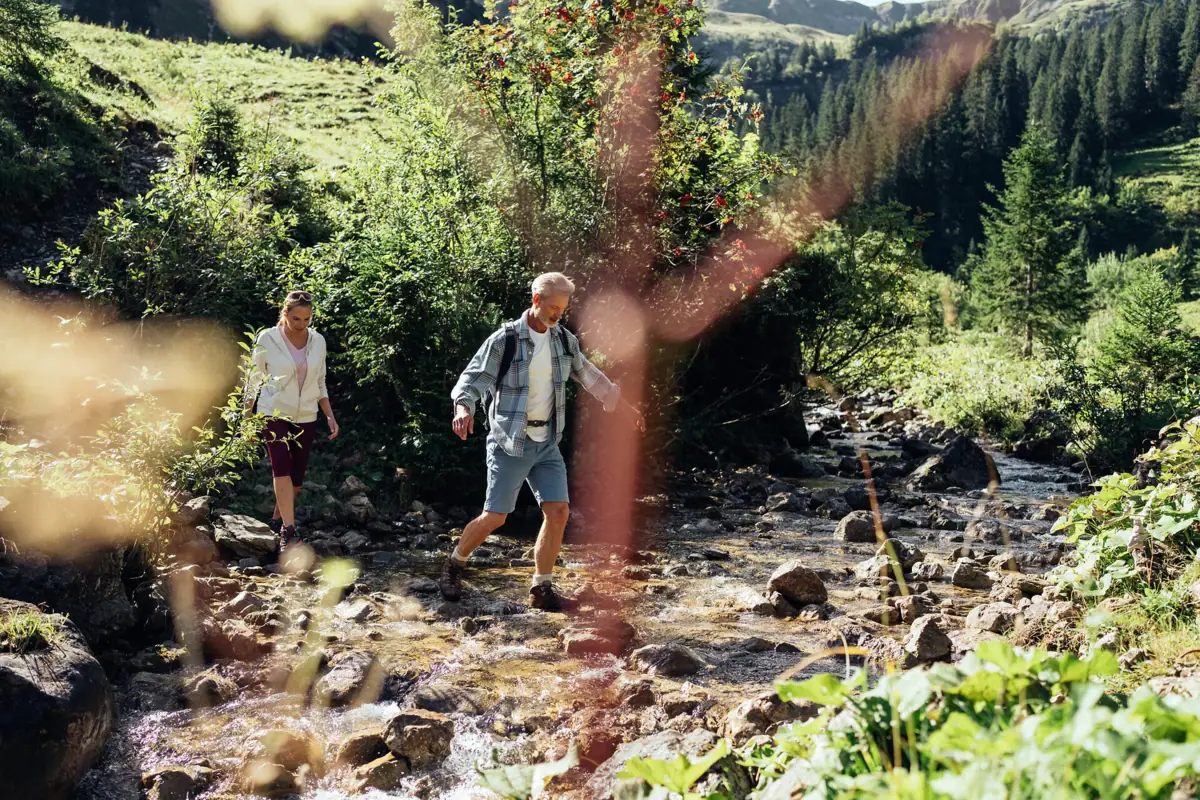
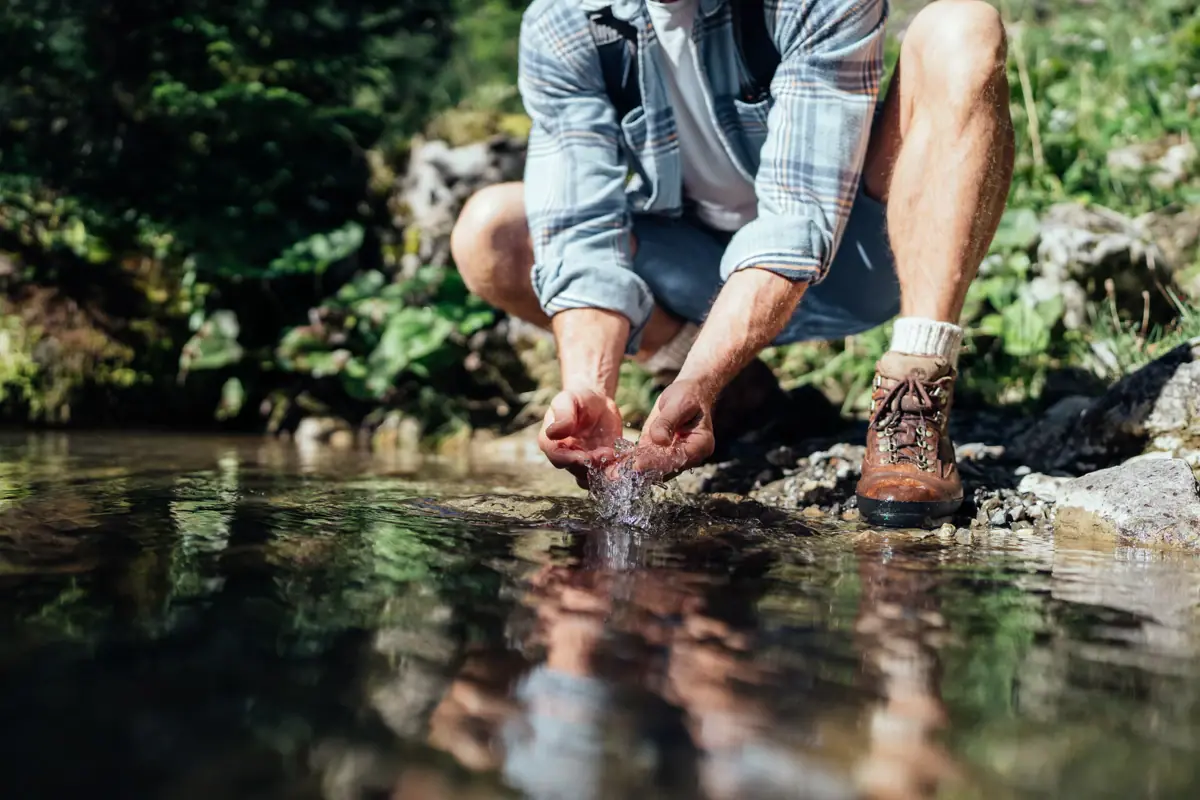
We follow the wide alpine path, which climbs gently alongside the water. This is exactly where our walk through the Bärgunttal begins. It’s a path that requires no athletic prowess, but gently helps us unwind. Right at the start, we cross the narrow bridge over the Breitach, which has its source up here. It is fed by the mountain streams Bärguntbach, Derrenbach and Turabach, whose cool, crystal-clear waters converge here. The steady murmur of the water accompanies us.
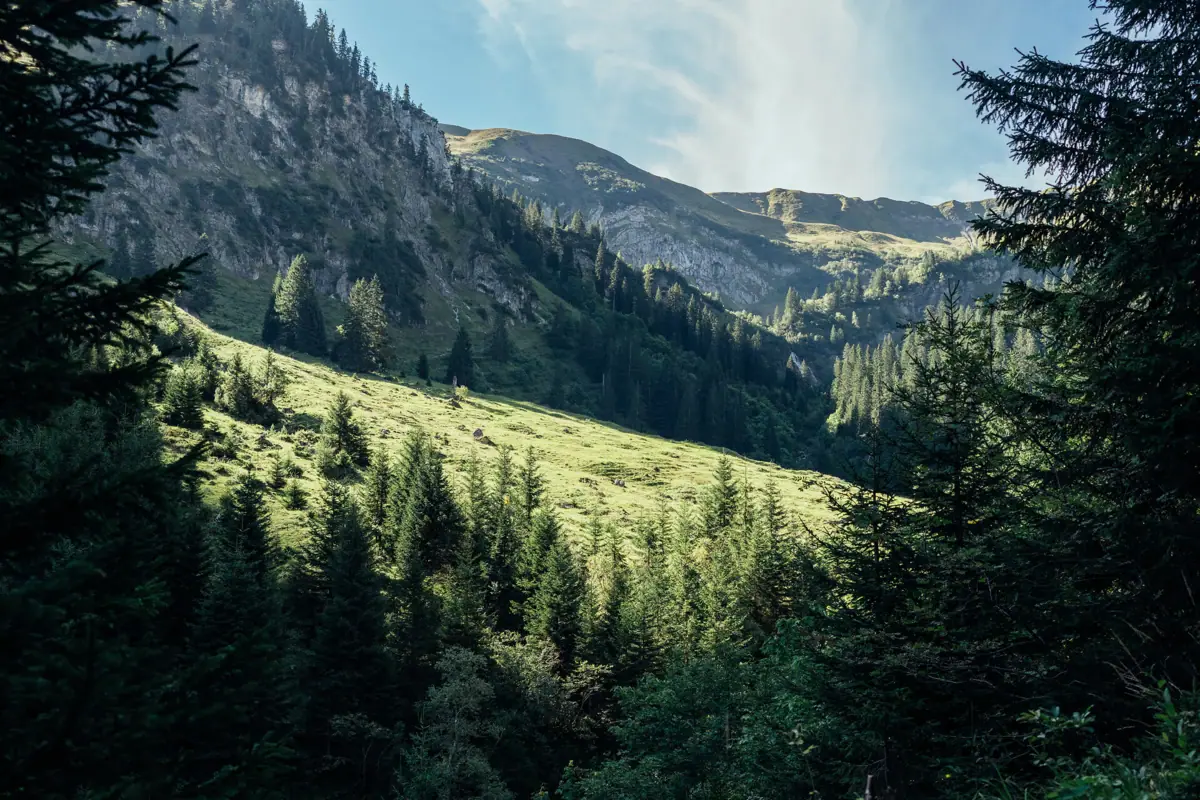
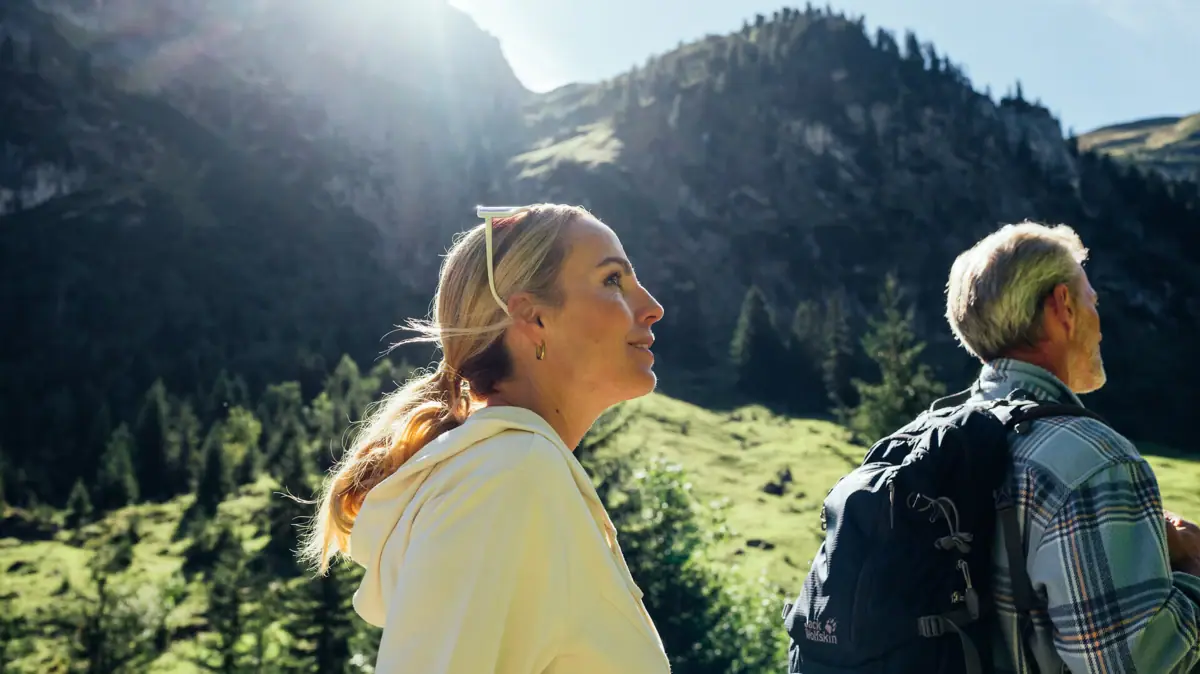
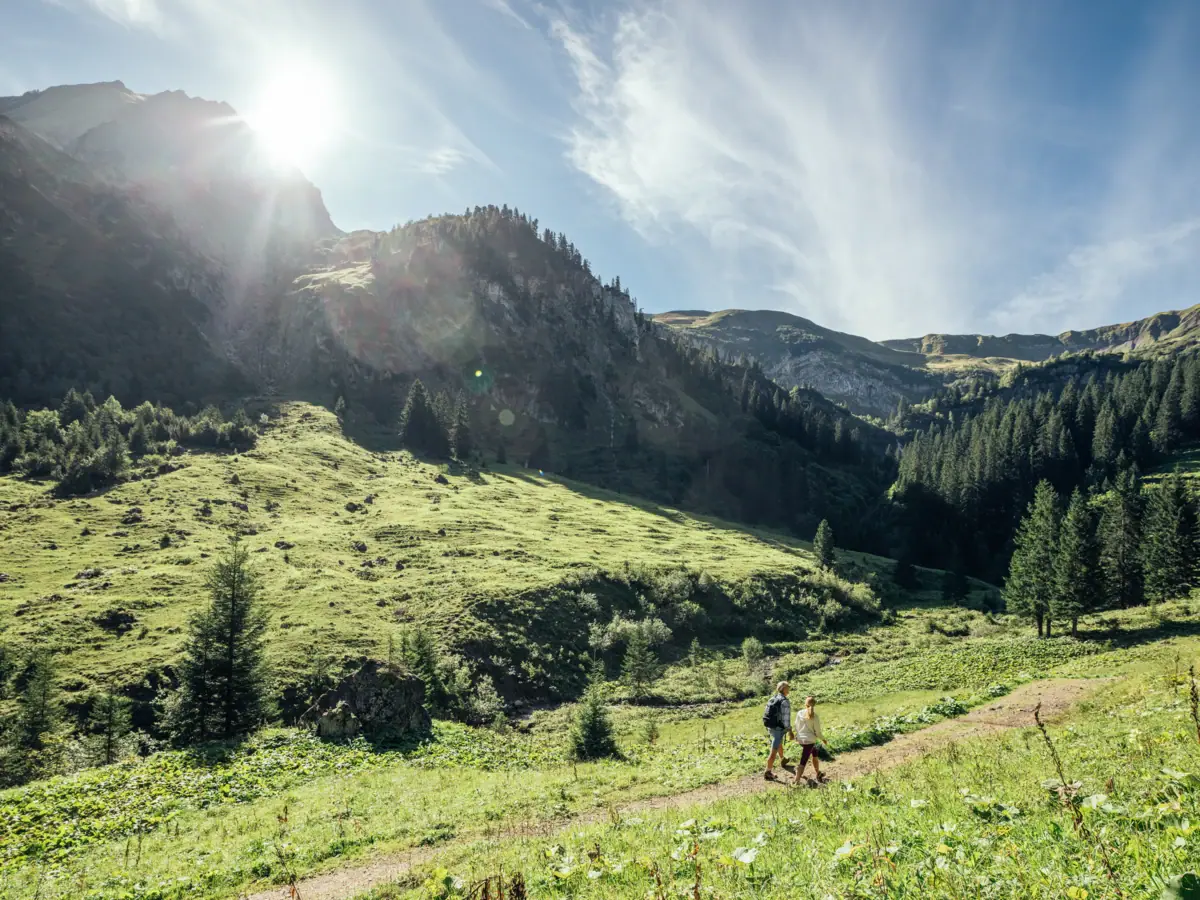
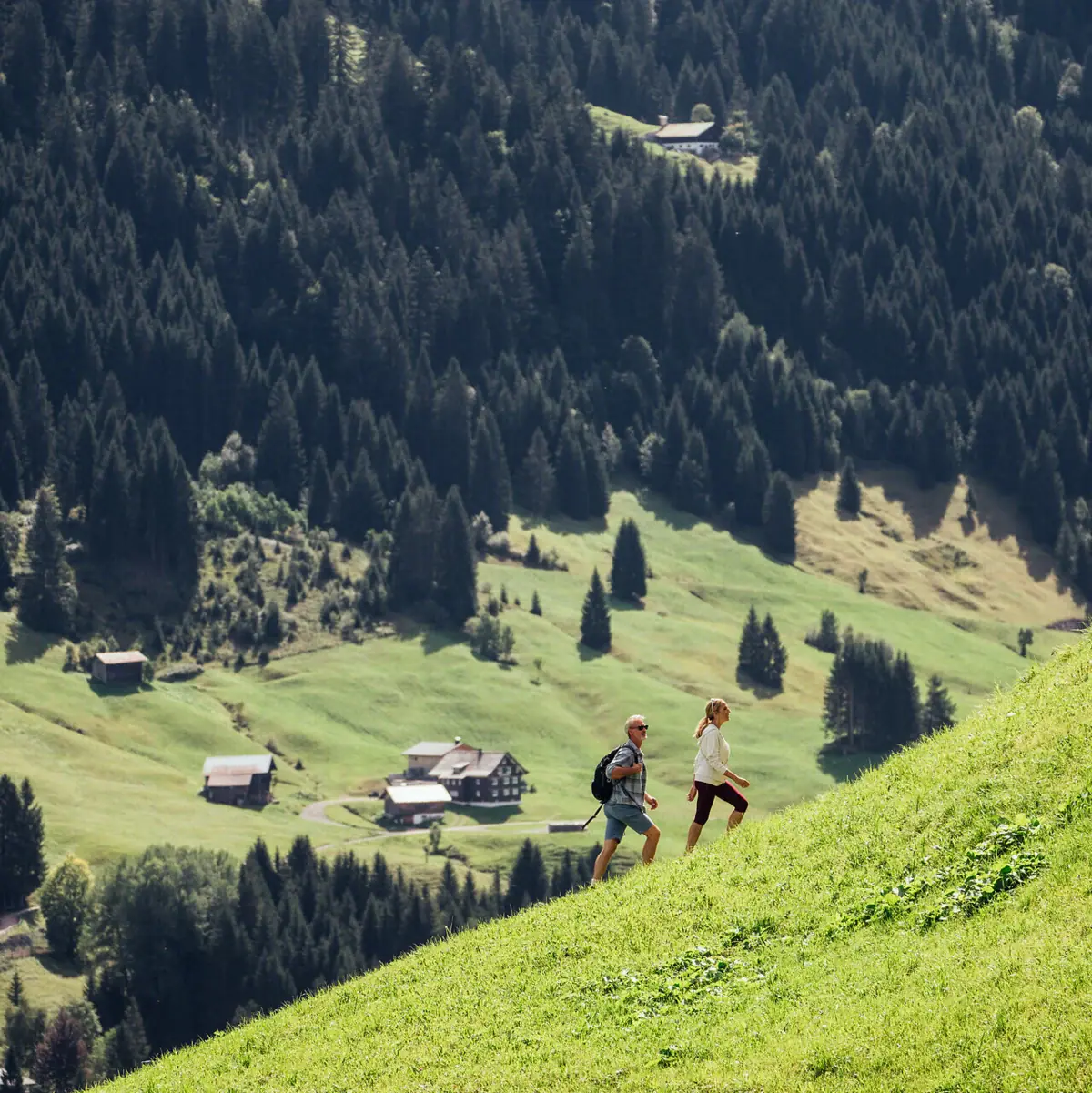
Ralph Hosbein, director of the A‑ROSA Ifen Hotel in Kleinwalsertal, is hiking with us. He points to the peaks, explains how to tell them apart, and tells us why the Bärgunttal is a special place for him. “It’s the tranquillity,” he says, and no sooner has he spoken than nature draws us back into its spell.
We listen to the stories told by Ralph and Jessica Hecker, who has known the A‑ROSA and the region for many years. She smiles as she points to the Widderstein. “It’s not just about taking it easy here,” she says. “If you fancy something a bit more challenging, take the Widderstein circuit: first to the Bärgunthütte, then up the steeper slope to the Hochalppass, across to the Widdersteinhütte and finally back through the Gemsteltal. Up there, it gets alpine and is secured with ropes in places. But the view across to Warth and the Hochtannberg Pass? You’ll never forget it.” We nod, look up at the play of light on the rock face and let our thoughts drift to the grand circuit. Today, we’ll take the trail at a leisurely pace.
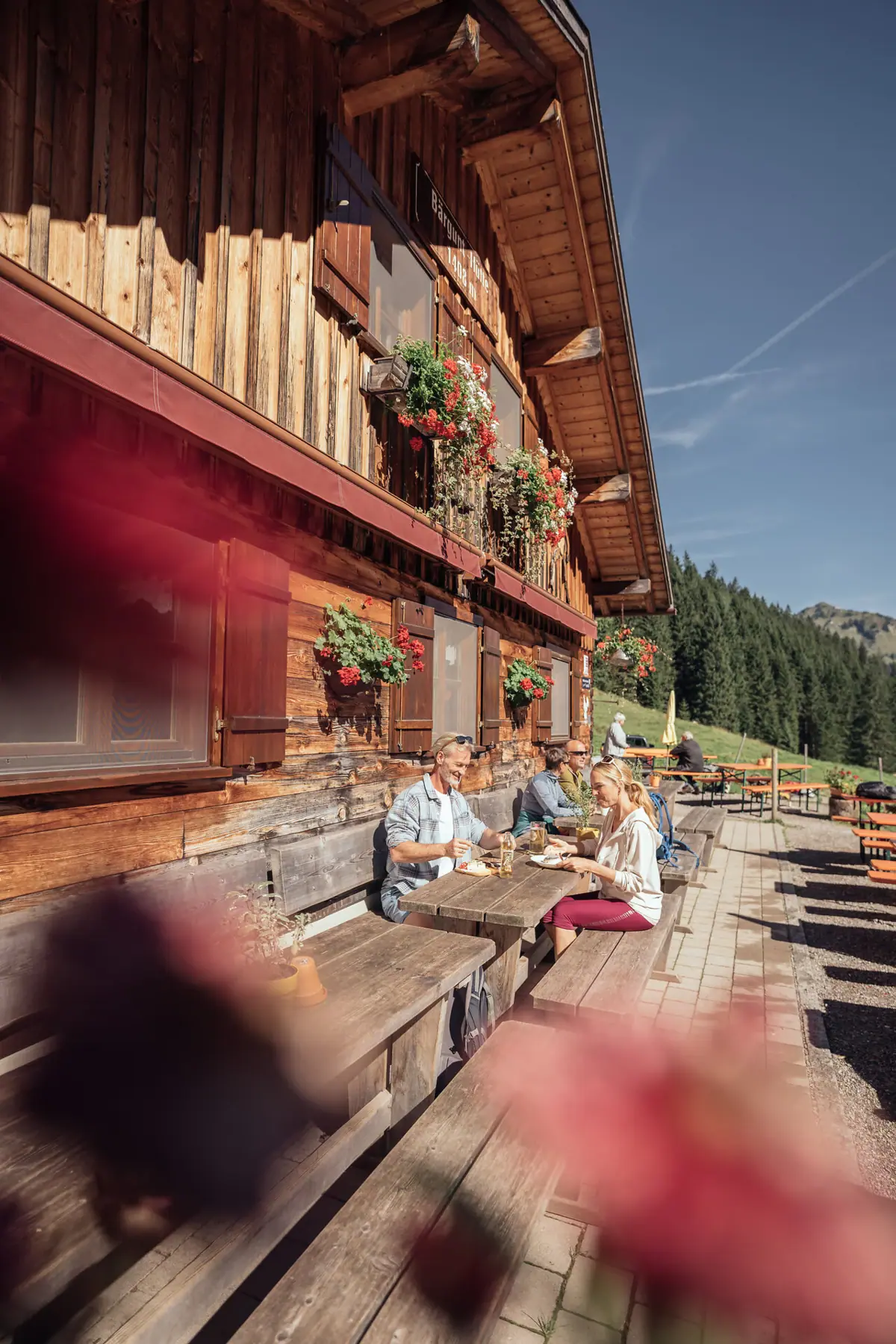
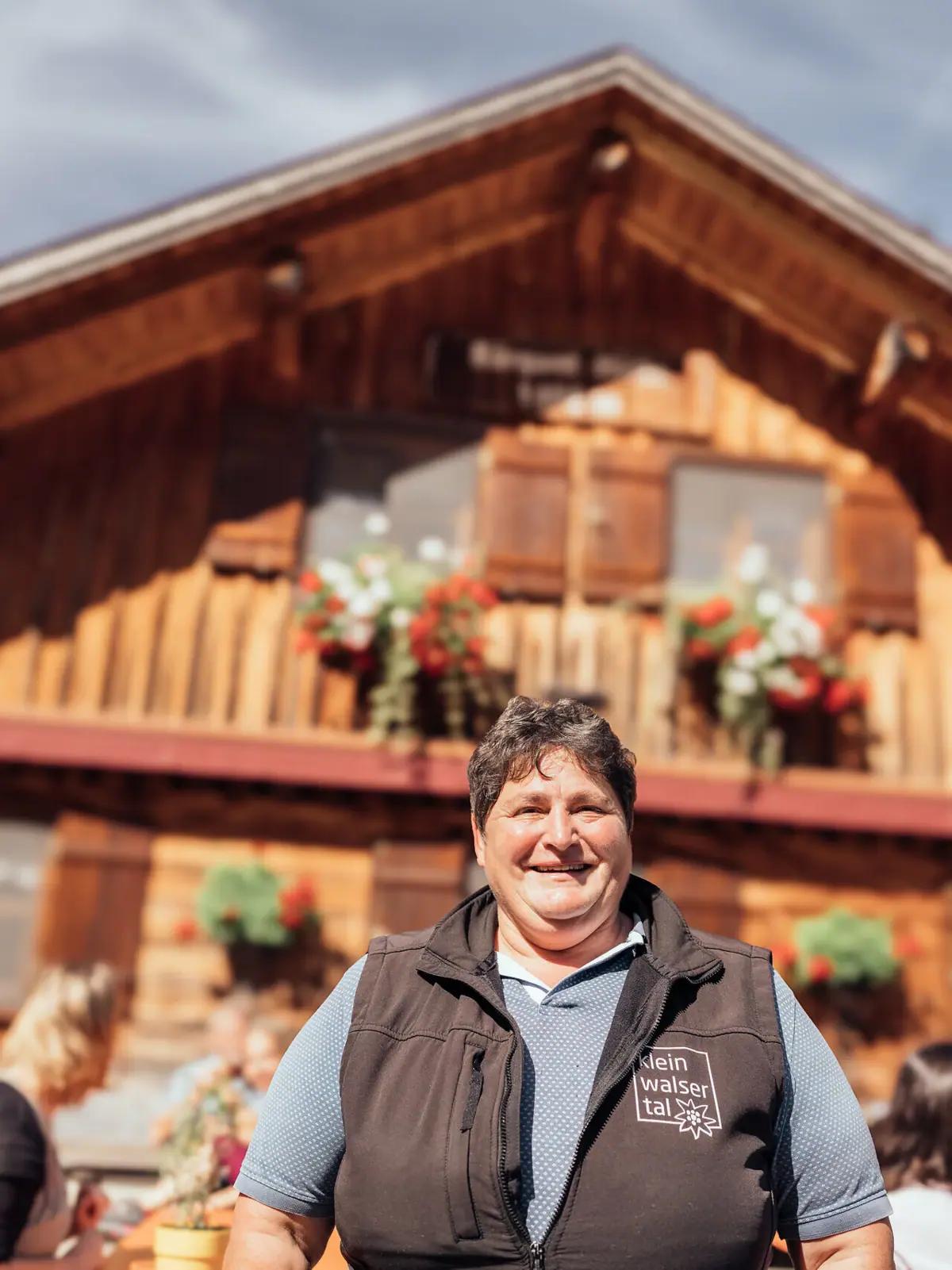
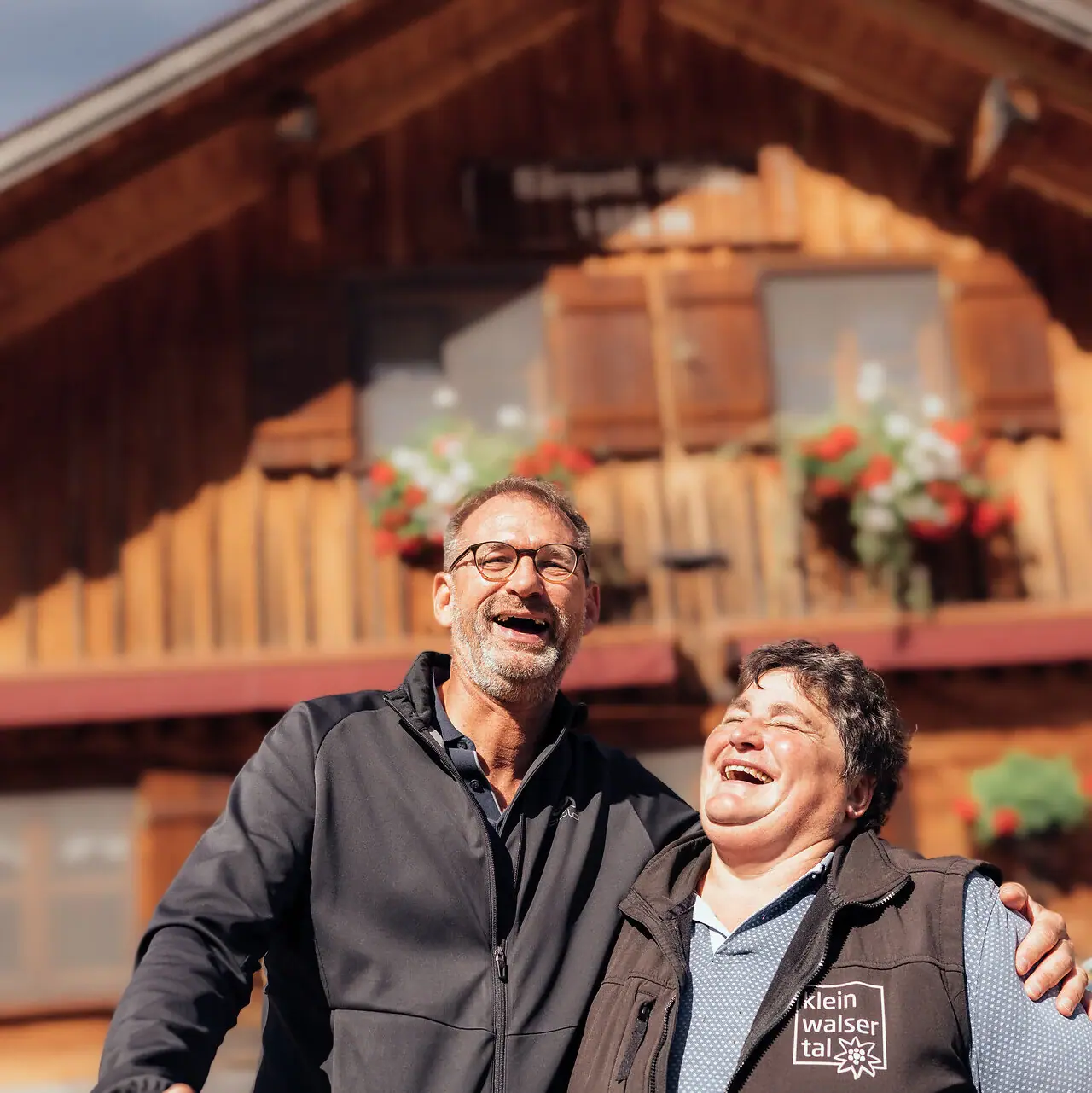
Sabine and her ‘
’ mountain hut specialities
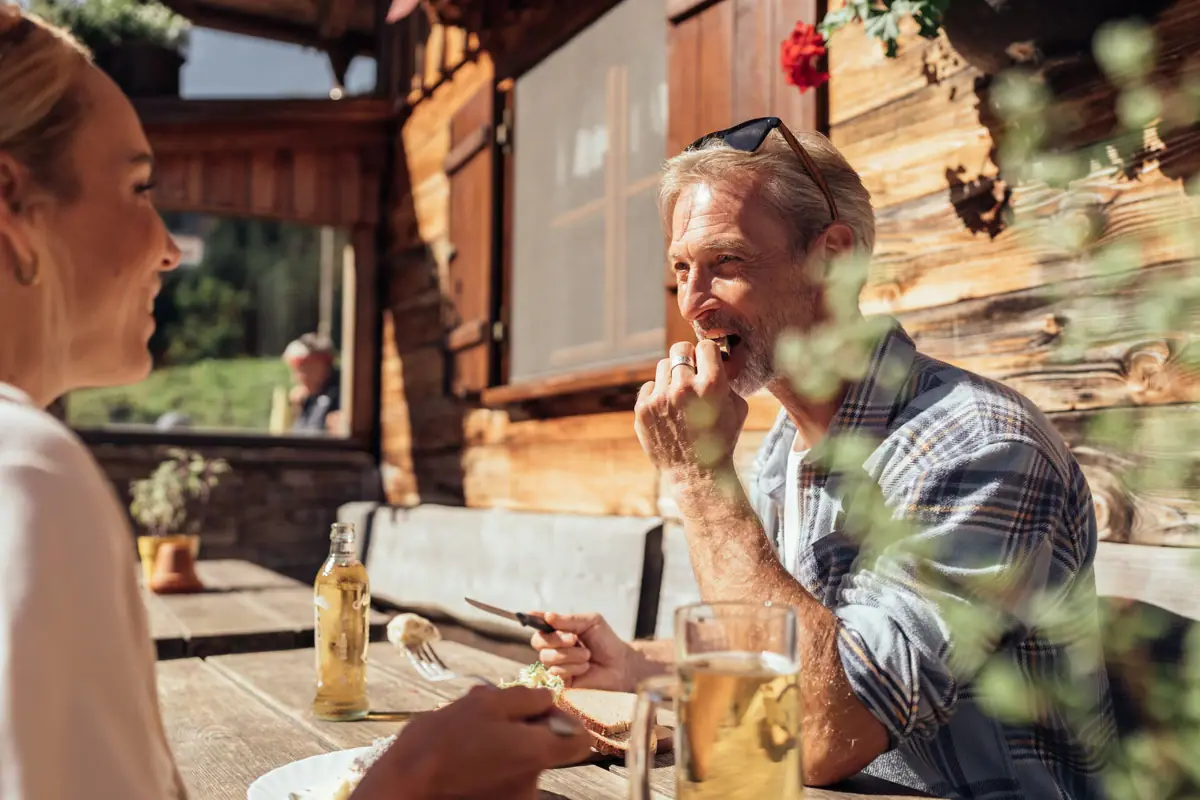
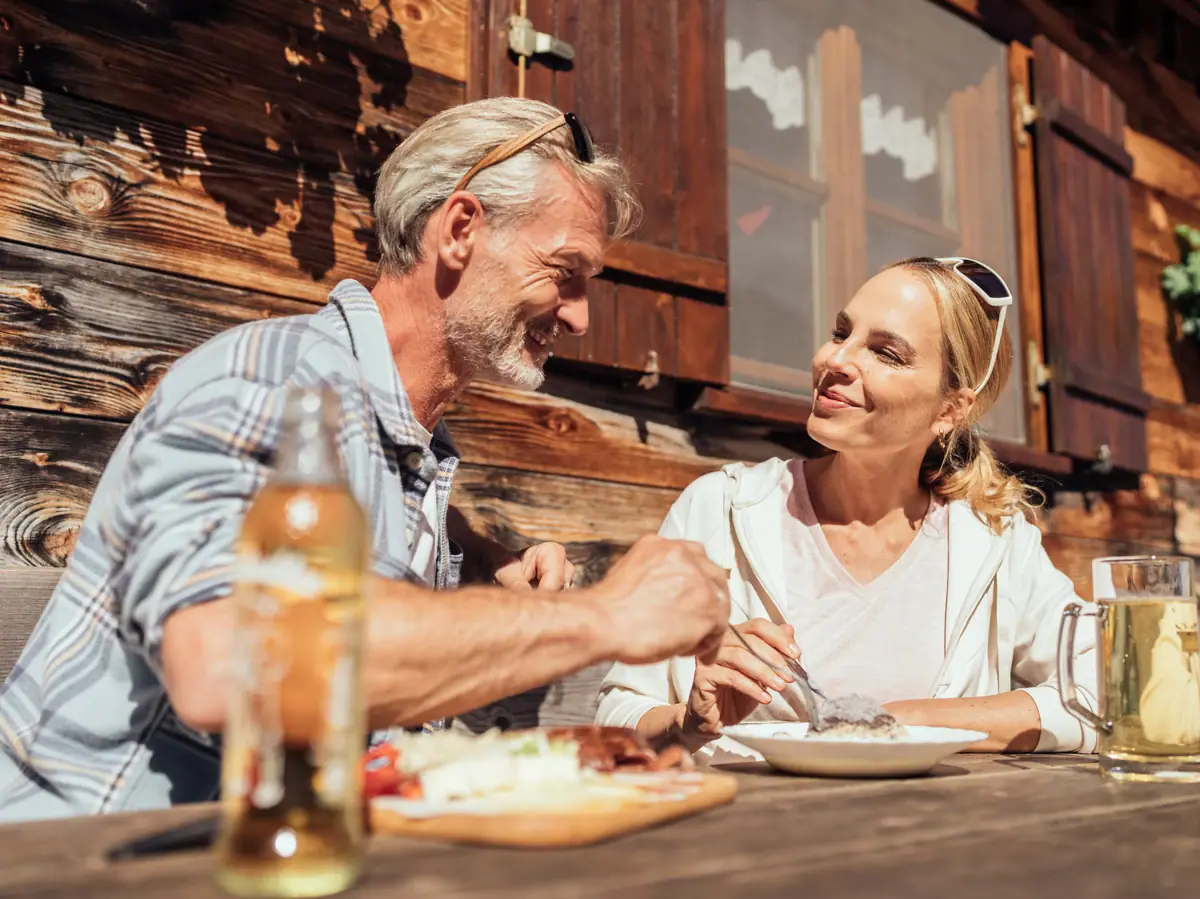
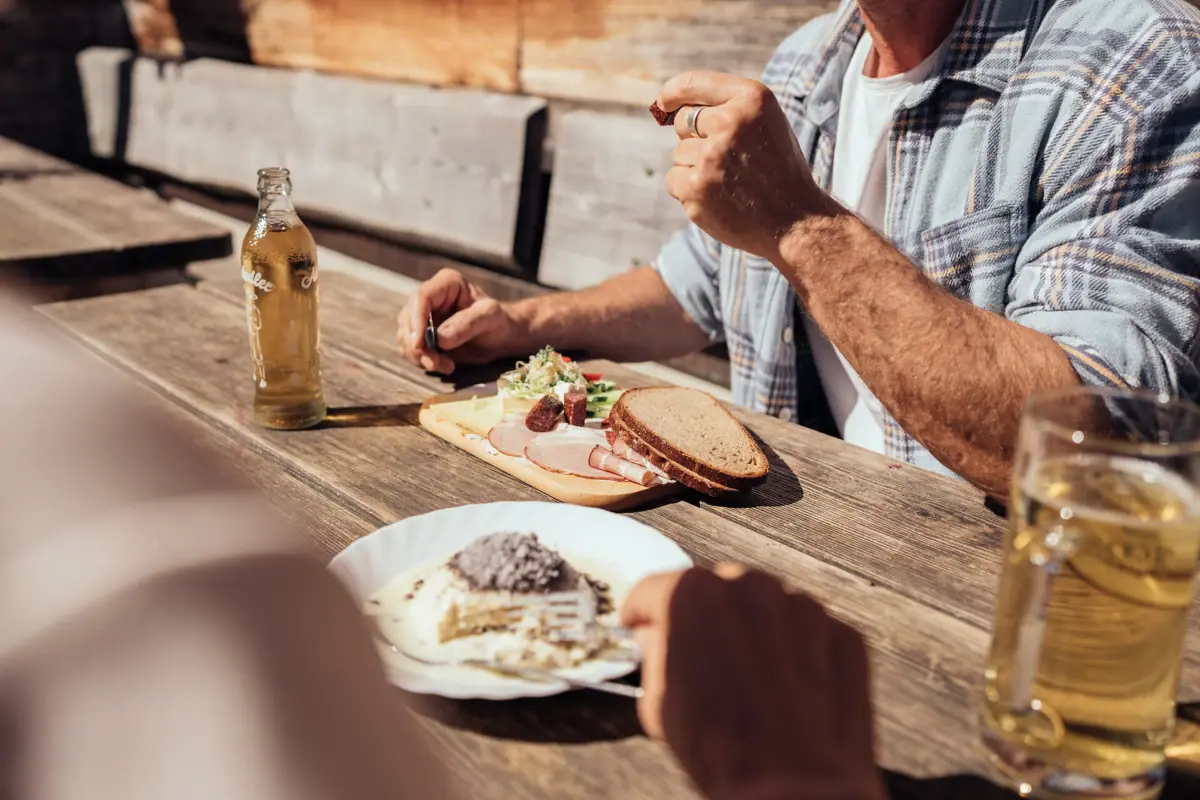
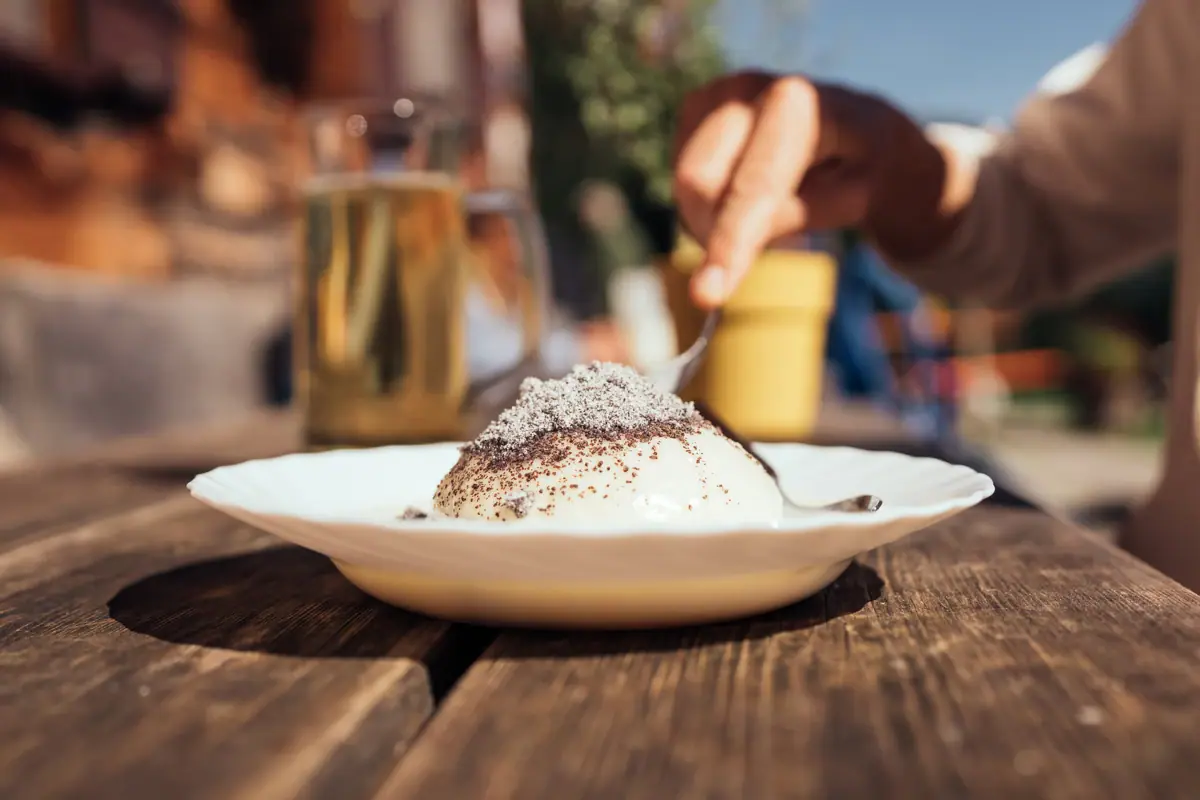
The hut smells of wood, soup and freshly baked cake. Sabine’s menu is small, but everything is consistently homemade – and you can really taste it. She uses almost exclusively regional ingredients. Whilst we’re ordering our snack, Ralph raves about the legendary cheesecake. And it lives up to its reputation: moist, light and airy, with a hint of tartness – a real treat that lifts your spirits. Sabine gets a bit shy when you mention it to her. “I just love baking,” she says, setting down another plate.
Alongside the cake, there are hearty snacks, soups, rice pudding and little traditional treats. No frills. No overloaded plates. Just good, honest food, perfect for anyone who loves Austrian cuisine.
As the wooden spoon stirs through a steaming bowl of soup, the aroma of fresh coffee rises and mingles with the resinous scent of the tables. Outside, the jackdaws glide on the updraft. Anyone sitting here finds peace – because nothing ever gets too noisy, and yet everything is full of life.

Where goats bleat, streams glisten and the landscape unfolds
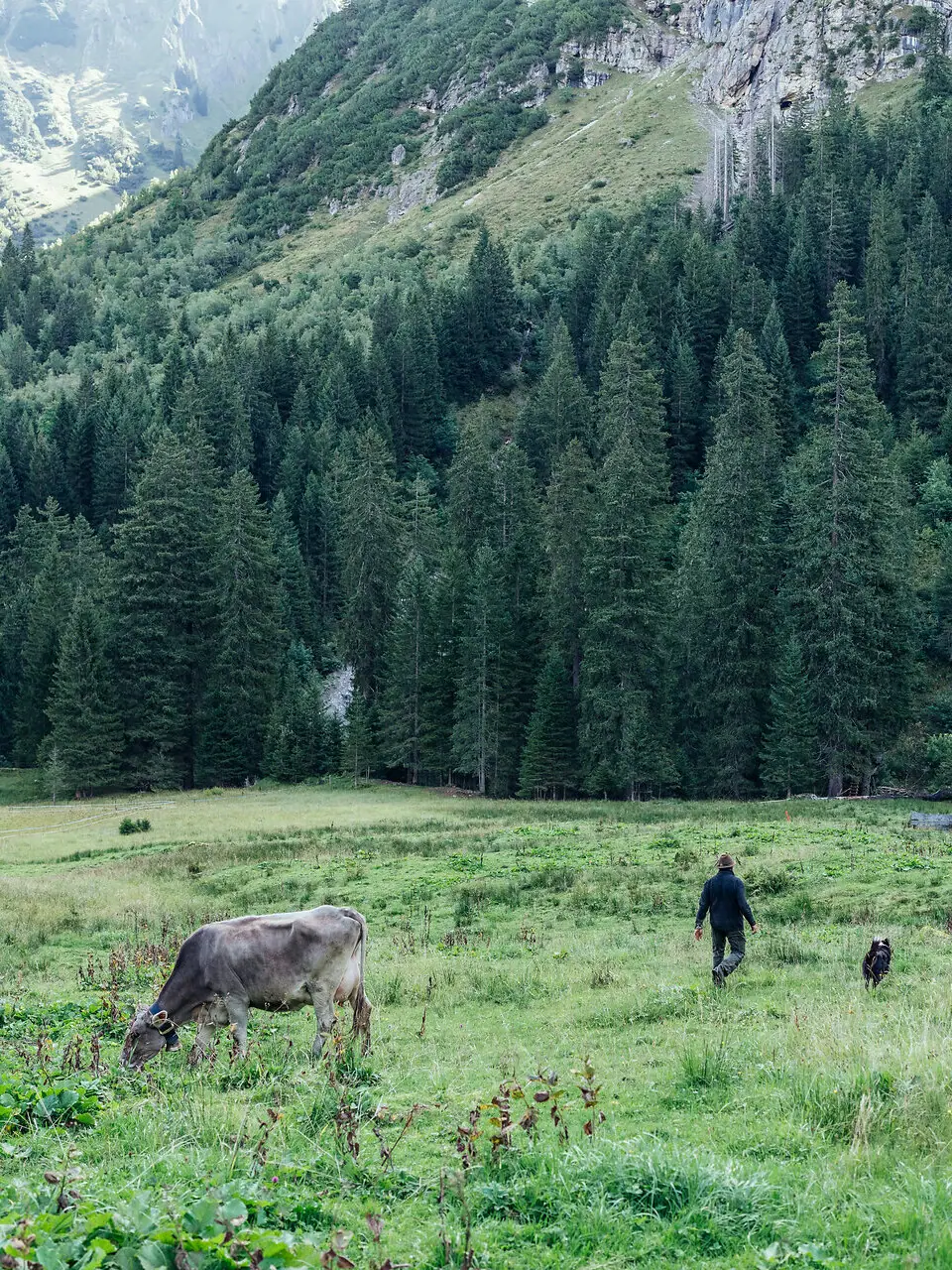
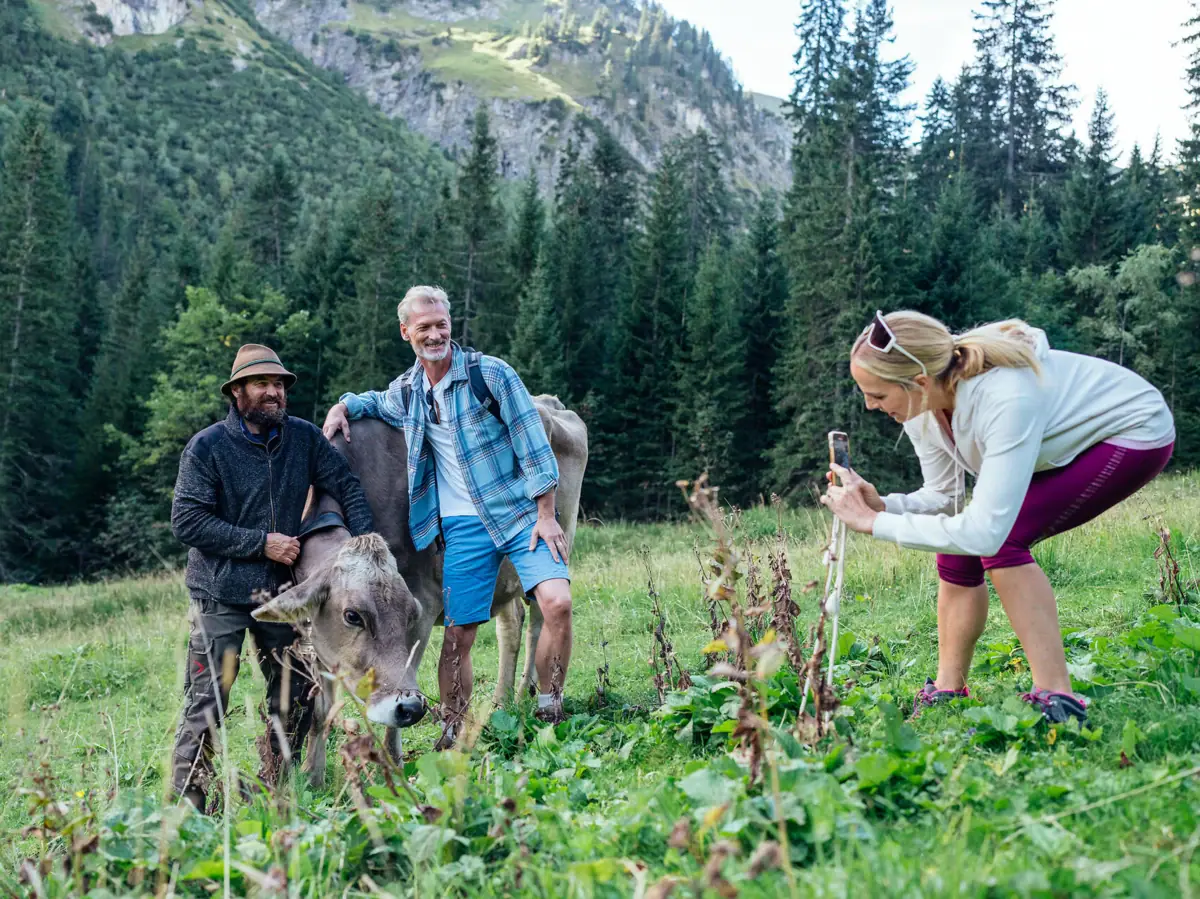
As well as the cows, there are also goats here, which love to bask in the sun on the warm rocks behind the hut. Curious, sometimes a little cheeky – and all the more charming for it – they are as much a part of the summer alpine atmosphere as the ringing of the cowbells.
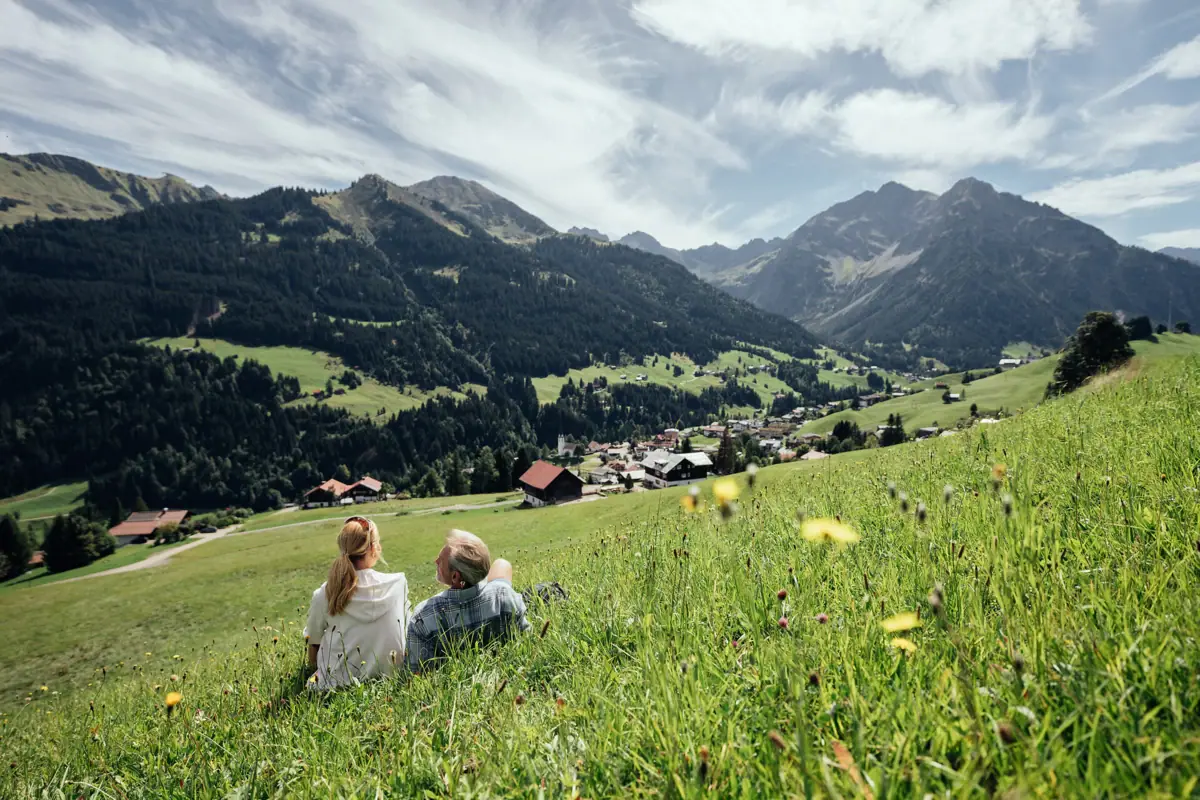
Behind the hut, the valley opens out. Small streams fan out across the meadows, which in summer are bathed in a colourful sea of flowers. The wind sweeps through the larch trees, and sometimes the shadow of a jackdaw darts past in a rapid dive. Further up in the rocks, with a bit of luck, you might spot chamois or ibex. Ralph advises always carrying a pair of binoculars. You often only spot the animals when you look more closely.
If you want to carry on hiking, follow the Panoramaweg towards Widdersteinalpe. The path climbs gently, then leads downhill across open pastures with views of the Walmendinger Horn and the Ochsenhofer Köpfe. A trail that shows just how many different facets this little valley has. Up here, the landscape seems vaster than you’d have imagined from below. More sky. More space. More silence.
Behind the hut, the world suddenly feels more spacious
As you continue down into the valley beyond the Bärgunthütte, the atmosphere changes. The sounds grow fainter, even though – or perhaps precisely because – nature has more space. The grasses sway in gentle arcs in the wind, whilst the streams set their own rhythm. Everything feels as though there’s no need to rush here. Perhaps that’s what makes the Bärgunttal so unique: it doesn’t set out to impress. It soothes.
Later, when we return to the Bärgunthütte for a final coffee or a glass of juice, we realise just how special the day has been. Not because we’ve walked far, but because we’ve let nature work its magic.
Why the Bärgunttal echoes
A simple path that pays dividends. A hut that promises nothing, yet gives everything. People like Sabine and Wolfi, who don’t put on a show of their everyday lives, but simply share them. And a landscape that doesn’t impose itself, but opens up.
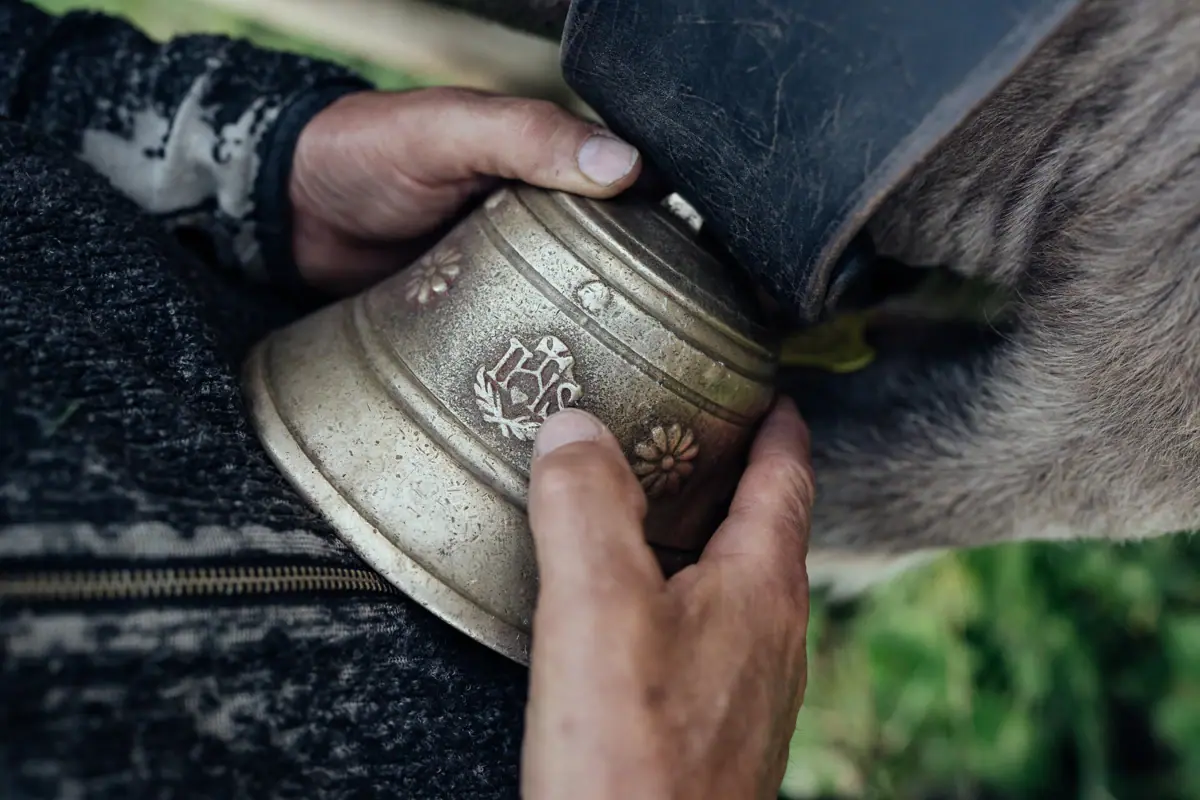
The Bärgunttal is no place for those in a hurry. It is a place for people who seek peace and nature. Here, you can hear once more what everyday life drowns out: the ringing of a cowbell. The murmur of a stream. Your own breath in time with the path. And sometimes a voice that says: “It’s lovely to have you here.”
And for those who, at some point, want more than just a slow pace: the Widderstein is already waiting patiently.